Buyer guide · 4 min read
Garlic Powder vs Granules vs Minced Garlic: Choosing the Right Grade
By Shantanu Gawli, Mireva Foods ·
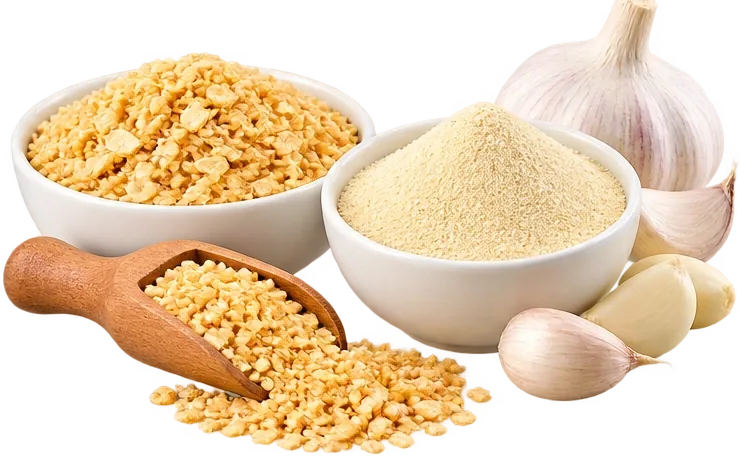
All dehydrated garlic starts as cleaned, peeled cloves that are sliced and dried. What changes is the final particle size, and that changes how the garlic behaves in your product.
Quick comparison
| Grade | Size | Behaviour | Best for |
|---|---|---|---|
| Powder | 80-120 mesh | Disperses instantly; can cake if exposed to humidity | Seasonings, sauces, gravies, instant soups |
| Granules | 0.2-1 mm | Free-flowing, low dust, mixes evenly with salt | Garlic salt, rubs, snack seasoning |
| Minced | 1-3 mm | Visible particles; rehydrates in liquid | Pasta sauces, dressings, ready meals |
| Chopped | 3-5 mm | Distinct pieces, strong visual cue | Stir-fry sauces, pickles, toppings |
| Flakes | Whole slices | Slowest to rehydrate; easiest to inspect | Infusions, further milling, soups |
How to choose
- Match particle size to the other ingredients in a dry blend. Garlic granules close in size to salt crystals will not separate during transport.
- Use powder where garlic should disappear into the product and deliver flavour fast.
- Use minced or chopped where consumers expect to see garlic.
- Check rehydration: larger pieces need more time and liquid in cooking.
Storage tips
Garlic powder absorbs moisture quickly. Keep bags sealed in a cool, dry store, use first-in-first-out stock rotation, and reseal opened bags immediately to prevent caking.