Buyer guide · 5 min read
Dehydrated Onion Grades Explained: Kibbled, Chopped, Minced, Granules & Powder
By Shantanu Gawli, Mireva Foods ·
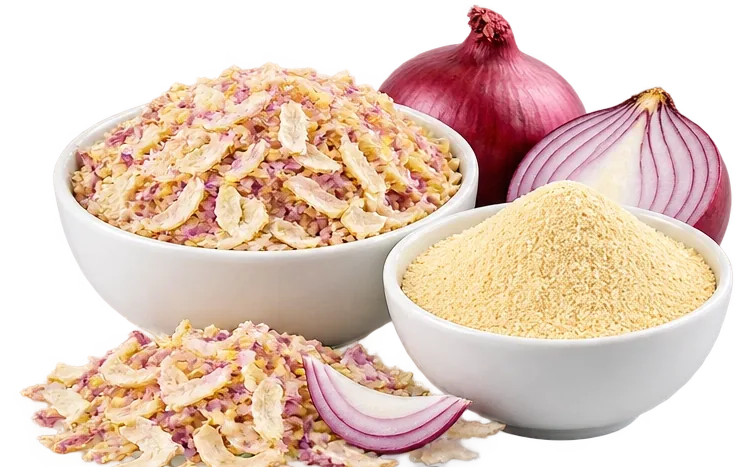
Dehydrated onion is sold in a handful of standard cuts. Choosing the right one affects how the onion looks in your product, how fast it rehydrates and how well it flows through your blending line. Here is how the grades compare.
Standard grades and particle sizes
| Grade | Typical size | Common uses |
|---|---|---|
| Kibbled / flakes | 8-20 mm | Soups, stews, pickles, further milling |
| Chopped | 3-5 mm | Sauces, ready meals, meat products |
| Minced | 1-3 mm | Dressings, dips, burger patties, toppings |
| Granules | 0.2-1 mm | Seasoning blends, rubs, snack coatings |
| Powder | 80-120 mesh | Instant soups, seasonings, gravies, bakery |
Sizes vary slightly between producers, so always state the size range or mesh you need in your specification.
White, red or pink onion?
- White onion: the most common grade for powders and granules. It gives a neutral off-white to cream colour that will not tint sauces or seasonings.
- Red onion: chosen when visible colour matters, for example in snack toppings, salads or premium blends.
- Pink onion: widely grown in Maharashtra and used in many Indian exports; it gives a stronger flavour with a light pink tint.
Why moisture matters
Most buyers specify moisture at 5% or lower. Low moisture keeps powder free-flowing, slows browning and limits microbial growth during long sea transit. Powders absorb moisture from the air quickly, so they should be packed in bags with a food-grade inner liner and resealed after opening.
What to put in your specification
- Variety (white, red or pink) and grade or mesh size
- Moisture, total ash and colour limits
- Microbiological limits (total plate count, yeast & mould, coliforms, E. coli, Salmonella)
- Packing, labelling and pallet requirements
- Destination port and Incoterm
A clear specification is the best protection against off-grade shipments. Every batch should then arrive with a Certificate of Analysis reporting against it.